• About

Shells & Bobbles

~ A Whole Lot of Creative Experiences and Happy Ramblings.. Sad Ones too Sometimes.. :)

Shells & Bobbles

Category Archives: Know Your Yarns

Yarnabout Monday – Alpaca

06 Monday Jul 2015

Posted by Bessie V in Know Your Yarns

≈ Leave a comment

Tags

Alpaca


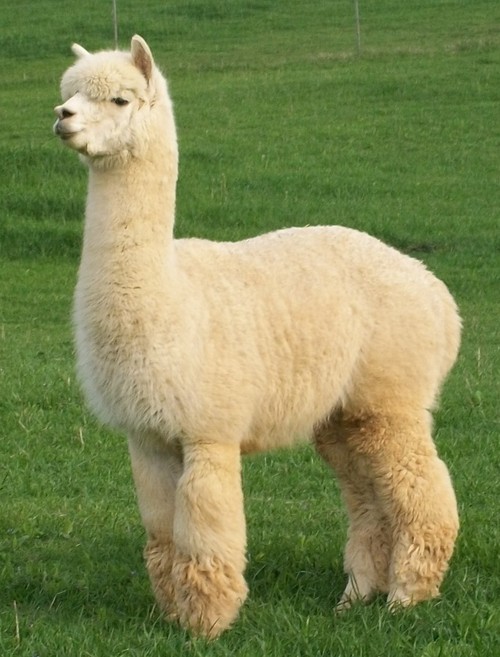
Here’s another really adorable and fluffy looking, smiley-faced, fiber producing animal.

The Alpaca!

They are a domesticated species of the Camelid family and resembles a llama.

Alpacas are kept in herds that graze on the level heights of the Andes of southern Peru, northern Bolivia, Ecuador, and northern Chile and are bred specifically for their fiber and meat.

Alpaca fiber is used for making knitted and woven items, similar to wool. These items include blankets, sweaters, hats, gloves, scarves, a wide variety of textiles and ponchos in South America, and sweaters, socks, coats and bedding in other parts of the world.

The fiber comes in more than 52 natural colors as classified in Peru, 12 as classified in Australia and 16 as classified in the United States.

Alpaca fleece is a lustrous and silky natural fiber. While similar to sheep’s wool, it is warmer, not prickly, and bears no lanolin, which makes it hypoallergenic. Without lanolin, it does not repel water. It is also soft and luxurious. In physical structure, alpaca fiber is somewhat akin to hair, being very glossy. It is also flame-resistant.

The price for American alpacas can range from US$50 for a castrated male (gelding) to US$500,000 for the highest of champions in the world, depending on breeding history, sex, and color!

Brands featuring 100% Alpaca yarns in their collection are :

The Alpaca Yarn Company / Blue Sky Alpacas / Lion Brand Baby Alpaca.

Yarnabout Monday – Cashmere

29 Monday Jun 2015

Posted by Bessie V in Know Your Yarns

≈ 6 Comments

Tags

Cashmere


Today’s yarn-about is on Cashmere.

Considered as one of the most precious and prized commodities in the world, Cashmere is actually not wool, but hair obtained from cashmere goats.

The Cashmere goats produce a double fleece that consists of a fine, soft undercoat or underdown of hair mingled with a straighter and much coarser outer coating of hair called guard hair. For the fine underdown to be sold and processed further, it must be de-haired. De-hairing is a mechanical process that separates the coarse hairs from the fine hair. After de-hairing, the resulting “cashmere” is ready to be dyed and converted into textile yarn, fabrics and garments.

Cashmere has been manufactured in Mongolia, Nepal and Kashmir in India for thousands of years. Famous shawls are the Jamavar with the famous paisley pattern. The fiber is also known as pashmina for its use in the handmade shawls of Kashmir.

It is fine in texture, strong, light, and soft. Garments made from it provide excellent insulation.

Lion brand and Pepperberry Knits feature 100% cashmere yarns in their collections.

Yarnabout Monday – Mohair

22 Monday Jun 2015

Posted by Bessie V in Know Your Yarns

≈ 1 Comment

Tags

Angora Goat, Mohair Yarn


Here’s another yarn that I have in my stash, but never used (the ones I bought just by the pictures and hated them?). I find it a fright to work with. Gets all knotted up and unraveling it is a nightmare.

The yarn is Mohair.

True to its name, it looks all hairy too. And fuzzy 🙂

Mohair is a silk-like yarn made from the hair of the Angora Goat. It is nick-named the “Diamond Fiber” because of its high luster and sheen.

South Africa is supposedly the world’s largest mohair producer.

The fiber is warm in winter as it has excellent insulating properties, while remaining cool in summer due to its moisture-wicking properties. It is durable, naturally elastic, flame resistant, crease resistant, and does not felt. It is considered to be a luxury fiber, like angora and silk, and is usually more expensive than most wool that comes from sheep.

Mohair is composed mostly of keratin, a protein found in the hair, wool, horns and skin of all mammals.

Fine hair from younger animals is used for finer applications such as clothing, and the thicker hair from older animals is more often used for carpets or rugs.

Mohair is a very soft yarn when compared with other natural and synthetic fibers and is  often blended with wool or alpaca.

The ones that I own are blended with Wool and Acrylic (the same range shown below – Nako yarns).

Berroco / Sirdar / Artyarns / Debbie Bliss are some brands that feature Mohair blends in their collection.

Do let me know if you have used Mohair yarn and what you think of it? It could inspire me to use mine and finish it off 🙂

Yarnabout Monday – Merino

15 Monday Jun 2015

Posted by Bessie V in Know Your Yarns

≈ 1 Comment

Tags

Merino, yarns


Welcome back to another yarny info on “Know your Yarns”.

Last Monday was about Angora yarns.

Today its Merino.

Also known as the King of Sheep, the Merino is an influential breed of sheep prized for its wool. There are all kinds of merinos – the most famous and well-known are Australian Merinos.

This breed of sheep are regarded as having some of the finest and softest wool of any sheep. They need to be shorn at least once a year because their wool does not stop growing. If the coat is allowed to grow, it can cause heat stress, mobility issues, and blindness (the poor things!)

The benefits and beauty of Merino yarn is in its superior breathability, temperature regulation, moisture control, and anti-bacterial properties. Unlike “traditional” wool, merino is much finer, softer, and, best of all, itch-free for all but those with severe sensitivities or lanolin allergies.

Colorful Merinio Knitting and Crochet YarnAlthough they’re extremely soft, Merino yarns by itself are not durable. So if you are using 100% merino for your project, they will have to be handled gently and with great care.

There are merino yarns that are combined with other fibers for more durability and that can be used for daily wear.

Merinos are great yarns for luxurious shawls and sweaters.

Another info : If you see a label that says Superwash Merino, it is merino wool that has been specially treated so that it’s machine washable and may be machine dried. Lion Brand features the Superwash Merino Yarns.

Other Brands are : Malabrigo Yarns / Cascade Yarns / Madelinetosh

That’s pretty much about Merino, I think!

Yarnabout Monday – Angora

08 Monday Jun 2015

Posted by Bessie V in Know Your Yarns

≈ 1 Comment

Tags

Angora, yarns

For all those who are new to crochet or knitting (which I don’t do, unfortunately), I am going to feature “Know your Yarns” every Monday.

During my initial bout of crochet fever when I first got hooked on to the craft, I have bought yarns solely from their pictures; not knowing exactly what they’re meant for or what they actually feel or look like. I still have quite a stash of these yarns that looked so pretty in the pictures, but when I actually saw and felt them, I absolutely despised them!

Hence, I think its very important to know the different types of yarns that are available and what they’re used for.


Today’s yarn is about Angora.

Did you know Angora wool comes from Rabbits?

I didn’t! I thought all wool came from sheep or goat. See? This is something new I learned today.

The angora fiber is the downy coat produced by the Angora Rabbit (like the ones above. Aren’t they the cutest!). It is known for its softness, thin fibers, and fluffiness.  They also have a silky texture, is 7 times warmer than wool and lighter which gives them their characteristic floating feel.

There are four different recognized types of Angora rabbit: English, French, Satin and Giant (German). Each breed produces different quality and quantity of fiber, and has a different range of colors from white through tan, gray and brown to black.

Because Angora fibers are very fine and smooth, it is difficult to spin it. Hence they are usually blended with other fibers. A 100% Angora is usually woollen spun. Most Angora fur is produced in Europe, Chile, China and the United States.

About the quality of Angora wool, the premium first quality wool is taken from the back and upper sides of the rabbit. This is usually the longest and cleanest fiber on the rabbit. Second quality is from the neck and lower sides. Third quality is the buttocks and legs and any other areas that easily felt and are of shorter length.

This yarn is ideal for making baby garments, sweaters, hats, scarves and mittens.

To name a few brands that feature 100% Angora Yarns :

– Plymouth Angora                   – Lanas Stop French Angora           – Malabrigo Angora                         – Katia French Angora                     – Orkney Angora

So there you go about Angoras.

Unknown's avatar

Enter your email address to follow this blog and receive notifications of new posts by email.

Follow Shells & Bobbles on WordPress.com

Categories

  • Causes (5)
  • Celebrations (3)
  • Crafts (5)
  • Crochet (64)
  • Crochet Stitch Library (3)
  • Crochet Tips n Tricks (2)
  • Family (9)
  • Health (2)
  • Holidays (4)
  • Know Your Yarns (5)
  • Life (9)
  • Life In Kuwait (13)
  • My Faith (4)
  • Nature (3)
  • Printables (1)
  • Project Small and Cute (2)
  • Reviews (1)
  • Travel (3)
  • Writing (5)

Instagram

No Instagram images were found.

Social

  • View shellsandbobbles’s profile on Facebook
  • View ShellsnBobbles’s profile on Twitter
  • View ShellsnBobbles’s profile on Pinterest

Shells And Bobbles

Shells And Bobbles

Liebster Award

One Lovely Blog Award

The Creative Blogger Award

Blogger Recognition Award

Printable

A Fan of

Social

  • Facebook
  • Twitter
  • Instagram
  • Pinterest

Blog at WordPress.com.

  • Subscribe Subscribed
    • Shells & Bobbles
    • Join 130 other subscribers
    • Already have a WordPress.com account? Log in now.
    • Shells & Bobbles
    • Subscribe Subscribed
    • Sign up
    • Log in
    • Report this content
    • View site in Reader
    • Manage subscriptions
    • Collapse this bar